
A MILLION WELSH SPEAKERS – SERIOUSLY?: A CALL FOR A POWERFUL LANGUAGE PLANNING AGENCY

Eluned Morgan, Adam Price and Cynog Dafis discuss a Welsh Language Agency at Dyfodol i’r Iaith’s meeting at Yr Egin, May 25th, 2019.
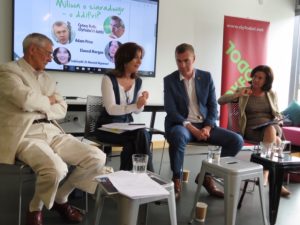
Thank you to all who attended our public meeting at Yr Egin in Caermarthen on Saturday morning, 25th May. It was wonderful to see such a large audience for this important and timely discussion on the next steps to reaching the target of a million Welsh-speakers by 2050. We were pleased to welcome Eluned Morgan, the Welsh Language Minister, Adam Price, Leader of Plaid Cymru, and to hear their response to our position, which was represented by Cynog Dafis. We would also like to thank Dr Mererid Hopwood for chairing the meeting and facilitating  a clear and balanced discussion.
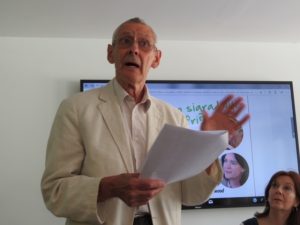
As you are no doubt aware, we firmly believe that powerful new structures are urgently needed to support and achieve the fundamental shift towards the growth of the Welsh language. Speaking on behalf of Dyfodol, Cynog Dafis argued that we now need a robust Language Planning Agency  to lead the work of restoring Welsh as a national language. “The agency,” he said, “could be either as an arms-length body or as a prominent and influential unit within the Welsh Government.” The current structures he noted, were entirely unfit for purpose.

As the discussion developed, it became clear that there was a consensus regarding the need to shift the policy emphasis to a comprehensive language planning approach, while still protecting Welsh-speakers’ rights. This, of course is the very kind of balanced and holistic approach that Dyfodol has advocated from the outset.
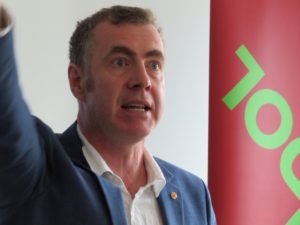
Adam Price outlined three priorities for reaching a million speakers. In addition to the Arfor project addressing the the economic opportunities and challenges in the language’s heartlands and looking into the advantages of a Welsh Education Act, he also committed to a Welsh Language Agency. Setting up this Agency would be among the priorities of a Plaid Cymru Government’s first 100 days.
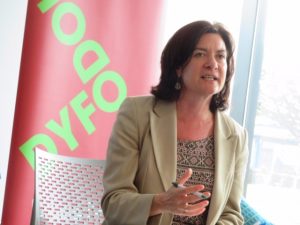
Speaking on behalf of the Government, Eluned Morgan said that necessary changes were now under consideration. She was not in favour of an additional arms’ length body, but a Welsh Language Agency within the Civil Service, with the power to influence policy across Government departments and answerable to the Minister was an option under consideration.

There was an opportunity to extend the discussion following the panel presentations. Among the matters raised by the audience were the need to gain wide support for the language, the pressing need for more Welsh-medium teachers, the role of the Mentrau Iaith and the need to address town and country planning issues. It became clear from the diversity and urgency of the subjects raised that there was a need for political will, resources and a clear allocation of responsibilities to push ahead with the agenda.

At the end of the positive and successful meeting, Heini Gruffudd, Dyfodol’s Chair said, “The consensus in this well-attended meeting was strongly in favour of establishing a powerful Agency to drive forward the strategy for restoring Welsh as a national language, with the Commissioner remaining in charge of strengthening services to Welsh-speakers. The Welsh Government must now get on with putting this house in order and ensure the financial resources necessary to achieve this ambitious target”.
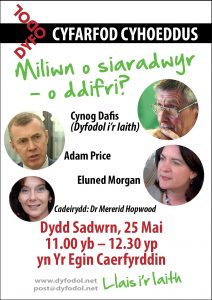
 

MILIWN O SIARADWYR? – O DDIFRI’? (A MILLION WELSH SPEAKERS – SERIOUSLY?) DYFODOL I’R IAITH’S PUBLIC MEETING YR EGIN, CAERFYRDDIN MAY 25th

As we all know, the Welsh Government has set a target of creating a million Welsh speakers by 2050. But what exactly is the strategy for reaching this ambitious aim? What needs to be done now to set the work on track?

Since the Welsh Language Bill, the original plan for reaching the target, has been abandoned, what alternatives need to be put in place if the Government is to achieve its aim? Can we seriously expect progress without fundamental changes to the existing structures and ideas?

Dyfodol i’r Iaith believes that these questions must be addressed if the Welsh language is to thrive, and this public meeting will be an opportunity to ask politicians how best to proceed with this essential and urgent work.

The panel will include the Welsh Language Minister, Eluned Morgan; the Leader of Plaid Cymru, Adam Price; Cynog Davis of Dyfodol’s Board and Dr Mererid Hopwood will chair the discussion. The meeting is free of charge and a warm welcome is extended to all. If you are passionate or passionately worried about the future of the language, then please call in at Yr Egin on Saturday morning, 25th May between 11.00 and 12.30; we look forward to meeting you!


ARFOR – CULTURE IS THE KEY: ADAM PRICE’S PRESENTATION 26/05/18

Thank you to everyone who attended our meeting at Galeri in Caernarfon on May 26th to hear Adam Price discuss the concept of Arfor. The principle behind the scheme is the foundation of a partnership body for the north and west (Môn, Gwynedd, Ceredigion, and Caerfyrddin); those areas where the Welsh language is at its strongest. Since these areas face the same challenges and opportunities regarding language, culture and economic development, a body such as Arfor would allow for strategic planning and development; an approach that would acknowledge culture as a key element.

Adam outlined the urgent problem of out-migration from these areas; that 117,000 young people have left these counties over the past decade. One of the first steps to challenging this trend, Adam argued, is to recognise the Welsh language as a valuable resource, which can potentially contribute to economic growth. Indeed, he emphasised that a strong local identity provides a strong and viable foundation for regeneration.

With £2 million available to develop these ideas, the initial challenge is to plan an appropriate and sustainable structure for the long term. A structure which, as Adam puts it, makes the most of the “high level opportunity to re-draw the map.” Following the agreement of a Strategic Plan and management structure, the possibilities can be fully explored and developed – innovative ideas such as Enterprise Towns and Community Banks, infrastructure projects (such as transport), as well as making the most of, and co-ordinating the good practice which already exists across the various organisations and sectors.

There was an opportunity for further discussion following the presentation. Support for the Welsh language beyond its heartlands was discussed, and it was agreed that Arfor had to provide inspiration beyond its boundaries, and encourage wider ownership of its principles.

Since reversing the tendency for younger people to leave the north and west is one of the scheme’s main aims, it was agreed that colleges and Universities have a key role to play, and that incentives should be made available to students to study locally, with a view to contributing to the area’s future economic prosperity.

Among the other matters raised was the importance of positive action – extending Welsh language administration within the public sector, for instance. It was also stressed that we need to celebrate all that has been achieved already, and establish these successes as a foundation for further development.